Neil Trips Up a Magician

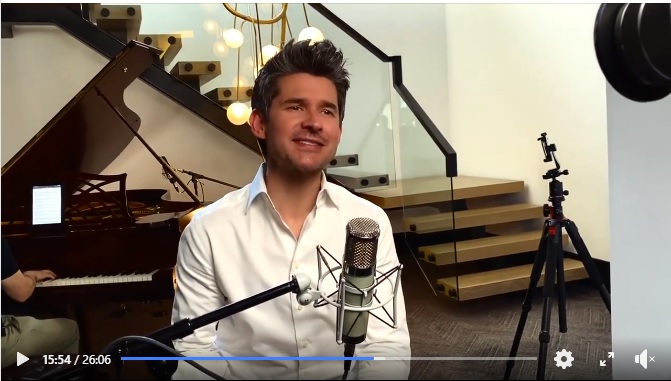
On Friday at G4G9, magician Derek Hughes asked Neil to come on stage with him for his act. Unfortunately for Derek, Neil has spent the morning listening to talks from illusionists on perspective and misdirection. My video is just awful, but the dialogue between the two of them is great:

Derek has made Neil promise to be a show with him again, when he’ll be better prepared for this sort of a thing…

Hackers Hacking Conway’s Game of Life

There were only a few talks scheduled for Saturday morning, since we were all going off to the party at Tom’s house that afternoon, but they were very good talks.

Al Seckel, who wrote Neil’s favorite illusions book, gave a talk about the Nature of Belief: how our own biases affect our perception, and how easy it is to set up different cues which will make the same picture completely different.

And then Pablos Holman gave a funny, and surprising demo of what hackers can do. First of all, he showed us the HackerBot, which his group built. They’d set it loose in a public area offering free wi-fi, whereupon it would roll up to people and show them their passwords, which it had picked up off the network. Next, he told us he would hack into the cell phone voice mail of someone in the room. I didn’t want it to be me, so I switched off my phone, and Al Seckel got himself spoofed, and a new sexy-sounding outgoing message, thanks to Pablos. Now, if that wasn’t enough, he asked if anyone in the room had one of the new “secure” credit cards with an RFID tag. Bruce Oberg did, and foolishly approached the podium, whereupon Pablos waved a small device near Bruce’s pocket, and popped his credit card number and expiration date up on the screen. And then Pablos showed us how to use a snap key which would get us past any Schlage lock. Oh, and that electronic key you have for your car–it can probably open lots of other cars, if you just walk around a parking lot pressing that button.

Just to show us hacking isn’t just good for quasi-criminal acts, he told us his group had worked on a smart bug zapper, which would send lasers to zap out of existence only bad bugs and let good bugs survive, i.e. for smart organic gardening. But when I told Peter about this, he thought it was a very bad idea. What happens when you walk into the zapping zone and one of the bad bugs lands on you? Oh, those UI people, always putting a damper on great ideas!

The next lecture was on why you shouldn’t use quantum probabilities to play poker, but I missed it, because Bill Gosper pulled out Neil and Julian to go talk to John Conway with him.

They talked about Conway’s Game of Life, and Conway seemed happy to see the next generation of cellular-automata-philes coming up.

As delighted as Neil was to talk to Conway again, he was eager to get back to the talks, which had moved on to an overview of the sculptures at Tom’s house. As it turned out, one of the sculptures was made by Dale Seymour, who lives in this house near Bill Gosper:

If we’re very nice, we may have a chance to go see it, and other groovy architectural details on the grounds some day.

And then, before we knew it, it was time for us to go out to waiting buses and get on with the big party.

The Puzzlers’ Philosophy

G4G9 invited both those who like to make puzzles, and those who try to solve them. So when I had the chance to speak to one of the puzzle-solvers, Joe DeVincentis, I asked him how he goes about solving puzzles.

He told me the first step is to figure out what kind of a puzzle you’re working on. This isn’t always obvious, and sometimes something that looks like one kind of a puzzle is actually another. Then, you figure out the appropriate strategy for solving the puzzle. And then, and only then, do you go ahead and get to work on the puzzle itself.

I found it remarkably applicable to real life. How many times, when you come across a difficult situation, do you just plow into it (or run away from it) in an effort to resolve it? It would be much more effective to use the puzzlers’ way of dealing with it. First, figure out what the problem really is, and figure out what you need to do to resolve that. And then, go ahead and deal with it. Doing otherwise is often the very cause of further plot twists in novels I like to read; or amusement in TV shows I like to watch.

Neil Meets Wolfram

Towards the end of the Friday lectures, I left Neil to go up to the hotel room and clean myself up for dinner. I dawdled, so when I went down, the G4G9 attendees were scattered, and I was unable to find Neil anywhere. Sure that we’d crossed paths, I set myself at the cocktail party, hanging out with the Japanese posse.

But time passed with no Neil, so I strolled back down to the buffet area, where I found Neil, worried. I knew he was safe amongst his math buddies, but one of them had sent him to his hotel room for security–probably at the same time I was going down to find him. I pulled Neil back to the cocktail party with me and bought him a (non-alcoholic) drink.

Then we went back downstairs for the dinner, and while in line, a woman appeared and pulled Neil away. I just asked him that wherever he ended up, he’d save a seat at the table for me.

As it turned out, Stephen Wolfram had asked to see him.

I don’t know the backstory, but I imagine it went something like this: Wolfram was talking with Bill Gosper, Corey and Julian about the lecture the (younger) boys had given on the Minsky Circle algorithm (don’t ask me to explain it, please). At some point, he said “has no-one at this event read A New Kind of Science?!”

Whereupon Corey, being a teenager, snarked that their 12-year-old buddy read it when he was 10, and liked it so much he read it again, and again, and again. Ah, Wolfram had found a kindred spirit! And thus, Neil was called. Neil tells me Wolfram asked him how he liked the book, and they happily talked about cellular automata and one of Neil’s projects.

Here’s my formal picture of Neil and Wolfram. I’m just grateful Neil remembered to save me a place at his table.

Neil Meets His Heroes at G4G9

As I discovered, the dress code for G4G9 is “math professor.” I made the mistake of dressing “business,” and ended up being confused with Ritz-Carlton staff. However, my costume turned out to be handy for crashing a business party upstairs and making off with a free glass of champagne.

G4G9 is Neil’s ultimate party: it’s a math conference, and better yet, one where his fellow attendees are the people whose works, and projects, and websites he’s been following for years. I only recognize the names of people who’ve written lots of books, because I’m the one who has to help Neil get them.

So, when I found myself in the registration line behind Clifford Pickover, I knew who he was, because Neil has almost everything Pickover–or as those in the know call him “Cliff”–has written. Pickover asked whether Neil had enjoyed making mazes, and yes, Neil went through a phase of maze-making last year and the year before that. (This year, it’s sliding puzzles, as in the Valentine’s Day puzzle which shows me trying to solve it.)

I took Neil up to the G4G9 sales room during the first break, where Pickover happened to be signing books and got a picture of Neil and one of his favorite writers:

And who just happened to be nearby–why the author of multiple logic puzzle books which Neil adores: Ivan Moscovich!

Charybdis and Scylla Academy may not be in session, but G4G9 has all the bases covered. I told Neil I’d get him a Sandro Del-Prete book, but only if it had an inscription from Del-Prete in German. Everytime he wants to read it, it’s a German review lesson. Bruce Oberg covered history in a 9 lecture informing us that nothing happened in 9 A.D. and that our ninth president died after only 31 days in office…of a head cold. PE was in place thanks to a lecture called The Art of Throwing Up, which turned out not to be the kind of throwing up you do after sneaking too many glasses of champagne at a business party you crashed, but rather, learning how to juggle. And needless to say, we’re totally covered on the subjects of math and art.

During a later break between lecture sessions, Neil ran off to speak to one of the other attendees, while scribbling on paper. He came back with a spinning top. When I asked Neil what he had done, he told me he’d helped a college professor solove a problem that had been posed in the lecture. Well, nice to see him getting along with his new friends…

Neil had another charming encounter with Ivan Moscovich. He made a cube with 6 business cards for Moscovich, and happened to give it to him in front of Mary Chrestenson-Baker. She in turn, showed Neil how to make an even stranger shape (kind of like a ball) with just 4 business cards.

Before we knew it, it was time for dinner. After dinner, I saw Caspar Schwabe and Akio Hizume go off into a side room, where a stage was set up for a magic show. In the front of the room was John Conway, another person who has written a lot of books Neil cherishes. Here Conway is also The Man. To me, he seems just like a math professor on break, though his lecture was amusing, though largely over my head.

So I dragged Neil away from the table and set him down (thanks to Caspar’s help) next to Conway’s son. Neil finally mustered up the courage to talk to Conway, and they got along just great.

As far as Neil could explain to me, they talked about turning one puzzle into another puzzle.

Then the real show began, and we had the treat of seeing six incredible magic shows. We saw a ring disappear and reappear instantly on a key ring in the magician’s back pocket. A card, not named to the end, appeared in a backpack underneath a chair, without the magician ever having gone near it. A deck of cards in Neil’s hands turned invisible without the magician visibly touching anything. One ball turned into nine within my closed hands.

How did those magicians do it?! Why simple! They just bend time, just like Hiro Nakamura. And here you were thinking that was fiction!

Today, the first set of presentations, to our surprise, included a meet the attendees (who aren’t giving lectures) part which included a beautiful slide showcasing some of Neil’s published work:

Neil went up and gave an impromptu description of what he did, which he described as “Strange Attractors.”

Neil really looked forward to the Stephen Wolfram lecture. He’s the guy who wrote two particularly fat books Neil wanted for Christmas in 2008. One of these is called A New Kind of Science, and it appears to be fashionable among those who know this book to admit to never having read it all the way through. Neil has read A New Kind of Science six times, and I think he likes the Wolfram Alpha web site too. Bill Gosper teases Neil about this, but it doesn’t dissuade Neil.

So perhaps Neil will meet Wolfram here, too.

Our G4G9 Pre Preview

Bill Gosper travelled with us to Atlanta for G4G9. He gave us a first taste of what it might be like, when at 5:30 am on Tuesday morning, he absent-mindedly accessed the 6th dimension and bypassed the security check at the airport. Since I was holding his boarding pass, this confused everyone, so we called him back and had him go through with us, the non-mathematician way.

Bill behaved himself for the rest of the trip, so we arrived in Atlanta without problem. When we landed, we called Tom Rodgers, the organizer of G4G9, who told us if we came over to his house, he’d feed us dinner and introduce us to the company that was staying with him.

My GPS device had trouble finding the right address, but we didn’t, because we could see the huge geometrical sculptures and a Japanese flag from the road. I did not know how to open the gate to get in, so Bill and Neil walked up to the house to solve the riddles so I could drive in.

In the yard, we found several people working on all sorts of odd structures. Akio Hizume was in a geodesic dome, steaming a bowl of water. I had to wonder if that was for dinner.

Then Caspar Schwabe collapsed one of his creations down so it was a circle on the ground, and told Neil to jump inside it. He reached down, and plup, Neil was trapped!

t

When Tom called us to see the black bamboo forest behind his house, Caspar let Neil go.

Tom showed his puzzle collection to Neil, which delighted Neil no end. You may know Rubik’s cubes, but you don’t know Rubik’s cubes like these:

Nine faces per side, pshaw–ever tried solving one with 18? With each cube being able to rotate 180 degrees? Neil discovered a Georgian puzzle box from 1835 and told me the only way that could be opened was by tapping it several times and then sliding the top on at the correct point of a tap.

He’s studied this stuff (on his own), but here he was seeing the real thing. He gleefully pointed out this sliding puzzle “Climb 24 by Minoru Abe” requires 227 moves to solve–if you know what you’re doing.

When Neil finally emerged from the puzzle room, we found Lennart Green. And a deck of cards.

Just for Neil, he pulled out his amazing tricks. For instance, when Neil chose the ace of clubs as the card he wanted to see, Lennart shuffled the cards and –oops–pulled out the ace of hearts. Another shuffle, and Lennart picked out the ace of spades. He checked with Neil–was it really the ace of clubs he’d chosen. Another shuffle, and out came…the ace of diamonds. Well, well, well. One more shuffle and all was well, because there was the ace of clubs.

To top of all off, he put 4 cards in Neil’s hands, which we all could have sworn were not aces, told Neil to rub them between his hands, tapped them, and voila–all aces. By this time, a small crowd had gathered, and the show had to be stopped for dinner.

Luckily for me, mathematicians and magicians had not been put in charge of dinner, and it was delicious. Neil did bring out his own puzzle box and we were unable to leave until it was solved, by which time it was late.

As I write, it’s the following day, and we have been joined by more of our California South Bay crew, most of whom are still asleep as I write. But the show goes on with a preview tonight, so the surprises are still far from over.

Ghost Jobs

Recently, a friend of mine quit her job because she objected to the ethics of her most recent employer. For one thing, he’d ask her to post job positions on Craigslist, with no intent of ever filling the job. For him, it was a cheap research tool–he’d cull the incoming resumes for the most qualified candidates, and then call them up and ask them what their expected salary/rate was. What he got was solid information on the current salary range for a variety of positions; what the job seekers got was false hope.

It’s a low-down thing to do, especially now, when more than a few people are out of work and willing to work for less than they normally would. But I’ve seen worse in the publishing and advertising field.

I particularly remember going in for an interview for a p.r. position at a monitor manufacturer when I was still young, unemployed, and hungry. After a cursory review of my resume, my interviewer told me she’d like to see me write a sample press release for an imminently shipping product, and set me at a desk with a computer and the spec sheet. I diligently worked away, and had a good draft done within half an hour. Then, I went to find my interviewer.

After hunting around for her in vain, I finally found an engineer who told me she’d left about 20 minutes earlier to go “work from home.” Lost and puzzled, I headed home myself. When I finally got a hold of her in a follow up call, she asked me for my consulting rate, told me she’d get back to me, and never did.

However, a month later, I did have a job at a magazine and received a press release from that company. It read suspiciously likeĀ  the one I’d written as a “test.”

It could have been even worse, however. I worked for a few months at an advertising agency in Oakland, and the owner didn’t hesitate to remind me that more glamorous agencies, in downtown San Francisco, got much of their work done with volunteer labor. They merely had to create an internship, dangle out the promise of a job in the industry (which they themselves would not provide), and change out interns every 3 months.

He wasn’t lying or exaggerating–from London to San Francisco, we’ve heard reports from people who were happy, nay, even thrilled to be getting experience in such a glamorous field. As for those interns, I know none who ended up with a career in p.r. or advertising, much less for the client they’d labored for for free; and why would they, when the agencies can easily find fresh volunteers with stars in their eyes and a smile on their lips, month after month, and year after year?

It must be terribly tempting for unethical employers to play such tricks with “internships” and jobs which will never be filled, especially when hiring is soft and it’s all too easy to take advantage of job- and career-seekers. As for my part, I’ve been lucky enough to land work with honest companies. And though it’s been 15 years sinceĀ  I was conned into writing a press release for just a promise, I’m still happy that that monitor manufacturer went under just a few years later.

Everything You Ever Wanted to Know About Me is Already Public

A few weeks ago, I went to a job interview, and I was surprised how well-briefed all my interviewers were about me already.

Did they want a copy of my resume? Well, no thanks, they’d already downloaded it from my LinkedIn profile. How about examples of my previous work? No worries–they knew who I had worked for before, and had passed around the copies of recent work I’d emailed them. Recommendations? Already done, since a colleague of mine had introduced me to the vice president of the division previously.

I had four quick and efficient interviews in the course of the hour, and in each case, the interviewers already knew what they wanted to ask me, asked it, and then dashed out to pull in the next interviewer. It was quite impressive, but a little intimidating, too.

Was what I had posted on LinkedIn really the me I wanted them to see? I’d always thought I’d be tailoring my resume to job positions I was interested in, and the resume I have on LinkedIn is oriented towards consulting work (which is primarily what I want, but still…) I have used LinkedIn as a resource of listing and keeping in touch with all the people I have worked with and/or would like to work with; but clearly, it’s also being used by recruiters to find key employees, too. Perhaps I should have posted a more formal picture of myself, rather than one I quickly took with my webcam! Perhaps I should polish my statement about myself, rather than the quick note I have about my background and current professional interests!

And what else had these efficient interviewers known about me before I stepped in the door? Had they checked this blog, and if so, did my personal life affect their decision? I try not to be controversial, but you never know what might set someone off. Did the see my letters to the editor to a local magazine, which has been cached for all eternity, or did they Google me and perhaps confuse me with one of the other Carolyn Bickfords, like one who was a VP of Marketing–and then wonder why I’d excluded her experience from my resume?

In the end, I don’t know, but I suspect the interviewers’ due diligence will pay off with the right hire. And I wonder how much I may ever need to bring to an interview in the future (besides myself and my personality), given that everything else is already out there to be known.

Lutherans Against Living In Sin

Peter and I are taking a 14-week Bible course: Kelly’ school requires it of all the non-church families like us. It’s kind of like catechism, but not;overtly, it’s to fill us in on the Lutheran lessons our child is learning in class. You know, over in public school, the spirit of Caesar Chavez is faith-healing Mother Earth from pesticide pollution, and the teacher will tell you you’re an idiot if you complain about the religious overtone. Yet, at the religious school, they’re worried I might be mad if my child comes home one day saying Jesus walked on water.

Anyway, I’m digging it because I haven’t had any religious education on that level. Peter’s gone though Catholic catechism, so he’s less into it. For him, it’s like watching the a remake of a long movie you’re seen before, except this time with the gory Goth parts edited out.

So, we got to the class on Holy Communion, and the pastor is telling us there are pre-requisites to being allowed to take communion in his church. Not having met those requirements, I’m comfortable with staying seated during communion. I told Peter I’m sure everyone else is cool with it, too, but he told me they’re just being polite and feeling sorry for me. That said, he stays seated with me.

The pastor went on to explain that his church has closed communion, that is, exclusive to the church membership and to invited guests who meet the qualifications for communion. Then, he surprised us by confiding that sometimes he’s had to exclude someone from communion, such as an unmarried couple which is openly living together.

Really? Who does that? Well, a Lutheran pastor, I guess! That got some discussion going between Peter and me, and in the end, we thought he was rather cool for willing to be so uncool.

Face it, these days, even in polite society, marriage is considered optional. Who’s pushing it, anyway? If a guy wants to marry the girl of his dreams, his buddies have to mock him for wanting to take up the proverbial ball and chain. A girl may want to marry her boyfriend, but does she really want to be the harpy who rails on about it, when it’s love, not a ring, that will presumably hold you together? It’s so much easier to just drift along, and let the children appear as they may; and when you get bored, drift off in different directions. Your friends are probably doing the same. If your parents are socially conservative, they may tsk, and make you sleep in separate beds when you come over; if they’re not, they’ll probably expect you to move in together, in their house. But, really, it’s not like living together is a big deal to anyone any more.

So, all there is left is a Lutheran pastor, pretty much telling you that unless you’re going to get serious with one another, you’ll have to stay seated during communion. (Next to Pete and Carolyn, whom by the way, whom we all pity for not being able to take communion, not that we would point that out them–however, at least they‘re married.)

So, bravo, for taking a principled stand, especially if it’s not the popular one.

The Lawrence Hall of Science and Miro

We haven’t gone on field trips for a while, and when I offered the chance to Neil, his first choice was the Lawrence Hall of Science. Of all the science museums in the area, it has the most puzzles. It doesn’t update or rotate its exhibits as much as other science museums in the area, but that can be kind of refreshing, too. After all, if you’re eager to try out the Tower of Hanoi puzzle, it’s nice to know that it will still be there after your 1-1/2 hour drive up to Berkeley.

One of the exhibits which has come and stayed are the Kapla bricks, which are little more than short flat pieces of wood, which the museum visitors use to make the most creative constructions. We saw them as a new exhibit in 2006, when Neil’s imaginative friend Ryan joined us and created a castle with a bridge. Since then, the Kapla bricks have moved next a small maze in a room with the Planetarium, and they’re always a hit with my children:

Neil was also eager to see the choice of puzzles in the museum store, and he ended up buying himself a quite inscrutable Chinese puzzle box.

I am always in awe of the view from the museum, which never fails to amaze:

A few days later, I set the children up with an art lesson about Joan Miro. We all came up with impressive Miro-inspired art, all in our own styles. As a conjunct to it, I planned to show the children two Miro paintings I’d seen at the Stanford art museum.

Unfortunately, when we got there, the Miro paintings had been rotated out of the 20th-century art exhibit. Alas! However, I had had the children do another lesson on Alexander Calder the day before (and we have two stabiles and a mobile to show for it). And as it turned out, the museum had an Alexander Calder mobile on display: you can see “The Chariot” here behind the children:

Kelly was very exited to see an authentic art piece based on what she’d learned. She wasn’t as thrilled with the Robert Arneson heads, though I always find them whimsical.

The downstairs special exhibit often includes an activity, so I took the children there to see if there was one with the current exhibit. But the exhibit was very very delicate calligraphy, with no activity (and honestly, a note which seemed to imply breathing near the calligraphy was seriously discouraged). So we had the most fun in the museum store, which had samples you could play with, and with the soft pink upside down Q in the courtyard. The soft pink Q, by the way, is by the very same artist who created one of our family’s favorite pieces of art, the giant diaper pin.

So this museum visit didn’t have all I expected, but it was good, and the Stanford art museum is always worthwhile, even if it doesn’t always have its Miro on display.

by Carolyn Bickford